Learning
Learning and metacognition: learning how to learn
Francesca Peruzzi, psychologist · 9 February 2021 · 8 min read
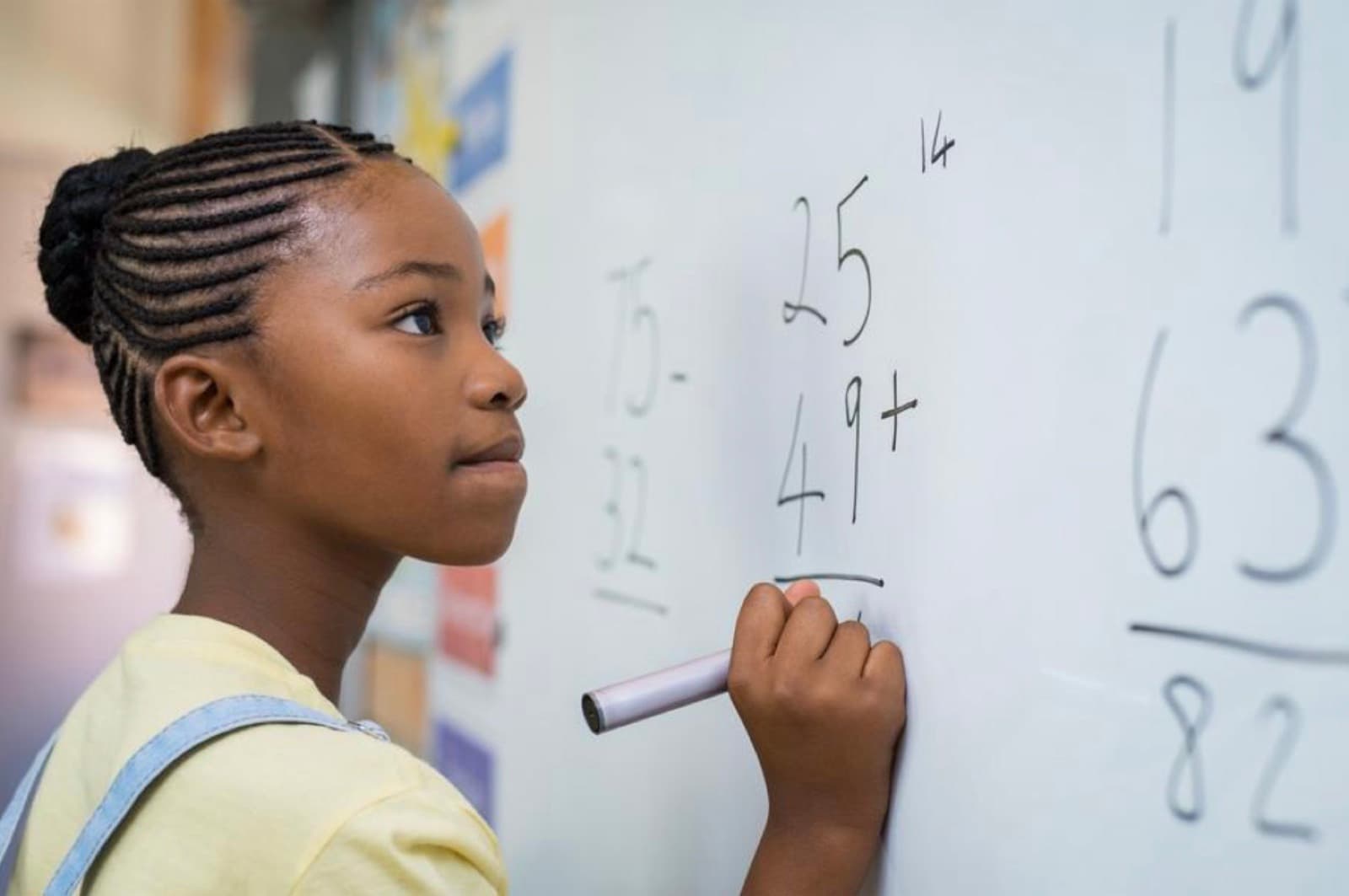
Learning how to learn: the metacognitive processes of learning.
Today training is discussed in every possible way, yet nobody talks about the construct underlying it all – a psychological and deeply human construct: learning.
What is learning?
Learning is a complex process of acquiring and changing content or patterns that follows from an interaction with the environment. It is a process that takes place deep within individuals and groups, and it is essential to take care of it.
Learning is a key tool for bringing about internal and external change.
By definition, the construct is interconnected with cognitive processes such as perception, attention, memory, thought and language, and it cannot be reduced to the mechanical assimilation of standardised content, because it is closely related to motivation, metacognition and emotions.
The main function of all learning is its adaptive function: it allows us to survive in different environments and cope with change.
It is therefore a constructive and dynamic process, necessary to – and a consequence of – a complex system in constant transformation.
The purpose of learning is to create shared knowledge, and for this reason it makes a vital contribution to the individual's sense of belonging to a community.
Let's take school as a first example: one of the first structured communities we relate to, and one that leaves a strong imprint on us.
Learning at school is the fundamental opportunity to learn to be strategic and self-regulated, to see ourselves as autonomous and competent, to persevere in the face of failure, to create and pursue mastery goals, to seek challenges with ourselves and, as a result, to gain confidence and feel included in a social context.
For these reasons, we need to pay proper attention to, and above all take care of, children's learning processes, because they shape the rest of their lives.
However, learning is a process that lasts our whole life, and for this reason it is essential, as adults, to keep developing awareness of the learning processes that affect us on every front.
Learning how to learn means allowing a space to form in the mind dedicated to "meta"-level skills, and taking care of it.
What does that mean?
The prefix "meta" indicates change, transformation, transposition, and in the biological sciences it refers to the concept of advanced and complex development, to organisation at a higher level.
In psychology, metacognition refers to the ability to reflect on a cognitive phenomenon, made possible by our capacity to step back and observe our own mental states.
Meta-level skills, known as metacompetences, therefore inhabit a dynamic space that includes adaptability, cognitive flexibility, reflexivity and the capacity for self-observation.
All of this has to do with the possibility of evolving over time and living by building and transforming our own models of knowledge in different contexts.
Strengthening awareness of learning processes and metacognitive skills is possible.
Scientific studies and action-research projects have been devoted to this area for a long time.
There are, in fact, individual and group metacognitive empowerment programmes that use tools and methods to support and reinforce learning, with the aim of promoting the abilities and enhancing the aptitudes of children and young people, and preventing drop-out.
In schools, metacognitive empowerment projects prove particularly useful in the area of specific learning disorders and special developmental needs.
Appropriate training in metacognitive skills and education in self-reflection allows everyone to gain, in the long term, greater confidence in their own abilities, as well as problem-solving skills and coping strategies (personal strategies that support better adaptation to one's context).
In every context, whether school or organisational, we need to keep certain areas of knowledge in mind and have the plasticity to find the connections needed to create shared value.
At the root of it all, we need to be able to listen actively to the person's needs, with full respect for their uniqueness.
In this regard, I will often talk about awareness as a key competence for developing human potential.
I believe it is essential to give the dimension of learning the space it deserves, in its broadest sense as a social and global phenomenon of co-growth and co-evolution, and to give back to it its innate human component as a value for every organisation.
We must learn how to learn as well as how to unlearn, because this is growth.
We can learn the art of deconstructing in order to reconstruct, giving power back to the creative processes that drive the evolution of human potential in every sector.
Facing change means teaching people to live with uncertainty, to tolerate different points of view, to strengthen their critical and self-critical capacity, to know how to cooperate and take responsibility for their choices and, above all, to acquire the ability to adapt in step with our times and with progress.
Francesca Peruzzi, psychologist
HOW TO CONTACT ME
- Fill in the form.
- Contact me on WhatsApp: +39 351 859 9378
- Follow me on social media.
And in the end you realise that life has always been with you, through small signs full of meaning that at first we cannot understand, and that accompany us in our inner transformation.
When you meet your path, you understand that your story was there, waiting for you; it has always been there in silence, like a wind around you – sometimes beside you, sometimes in front of you, sometimes behind.
Your story, the story of you, is the most important one you can build, tell and pass on.
Encuentra tu vía – find your way, meet your heart, because, as P. Coelho wrote, it knows all things.
My name is Francesca Peruzzi. I am a psychologist and a free traveller, and I have always had a passion for dance and creative movement. I accompany people in their personal growth, helping them make the most of the transformative potential of psychological knowledge, mind–body practices and expressive practices. Today I'd like to tell you about a special journey: my own. A life story woven from disappointments, acts of courage, huge changes, joys and suffering, all of which have contributed to my personal growth.
In short, I'd like to tell you a little about myself, and about how great inner and outer changes led me to deepen my knowledge and experience of transformative journeys, and to develop a strong empathy for those who, like me, are on a journey outside and inside themselves, exploring lands and paths different from the conventional ones.
Life sometimes leads us into blocks and dead ends shaped by our family history, by the accumulation of difficulties made heavier by the uncertainty of today's reality, and by systemic dynamics that leave us needing to start again, to be reborn in a new context.
When we search for our path far away – in travel, towards new destinations, chasing dreams and desires – we come to realise that the point of departure and arrival is nothing other than our inner home, our heart.
Psychology has taught me a great deal; in a way it saved me, and since I was lucky enough to encounter it in its many forms, I have never stopped.
I am navigating a long path of change and continuous growth. I actively seek it out, I'm never satisfied, and I want to develop knowledge and experience that allow me to share and to help people in my work as a psychologist.
Throughout my ongoing training I keep deepening my knowledge of health psychology, integrated care paradigms and therefore the complexity of the relationship between mind, body and spirit. I work on personal development across the life cycle, and I study the innovative fields of body psychotherapy and the frontiers of contemplative science.
I travel through the contributions of modern psychology, anthropological and psychoanalytic research, and I am fascinated by the ancient ancestral traditions that carry with them the wisdom of myths, rituals and dances, and the therapeutic power of nature.
The psyche, embodiment and movement are the foundations of my research and my work, together with connection to nature and creative processes. These fields now allow me to bring together my passions and my artistic soul.
I study, practise and explore awareness and self-awareness practices, which I consider genuine tools of personal transformation, essential for getting in touch with our inner world and recovering a state of wellbeing.
For this reason I integrate relaxation techniques, mindfulness and art therapy into my work.
I feel like a free nomad, and I chose to study a science of the soul in order to learn to make a journey of transformation without fear, and to accompany those who feel the need for it. I chose this path because it allows us to consciously explore and move through the infinite relationships and connections of human nature.
Because of various ups and downs I had to make a choice, and I decided to change place. My first stop is here, on the island of Fuerteventura: its wonders drew me in and welcomed me, making me feel ever more alive and connected with myself and the nature around me.
For me, the care of the soul is an art of transformation: it offers us the chance to bring awareness to our personal inner experience and to trust the inevitable processes of change we find ourselves going through.
It accompanies us in knowing and becoming conscious of our inner alchemy, and leads to a deep and lasting restructuring of our relationship with ourselves and with others.
Sometimes everything seems so far away, out of reach; and yet there is a symbolic language hidden in everything, where courage, trust and wisdom meet – a language that nature places before us every day.
A secret language we all know and can return to by looking at what is kept hidden or lost within us, at the bottom of the soul, submerged by fears and by personal and collective conditioning.
I created a podcast that offers ideas for moving through change and tools for improving wellbeing. The podcast is called "viaggi di crescita personale" (journeys of personal growth).
Thanks to technology, I continue to support people with online psychological consultations and personal growth programmes (Italians, expats, digital nomads) from all over the world, and to accompany anyone who wishes on their path of inner transformation and rebirth.
Click here to listen to my podcast!
click here to discover my programmes!
OR Contact me.
Have a good journey
Francesca Peruzzi, psychologist