Moving Mind · Arts therapies
Dance Movement Therapy: symbols, the body and the transformation of the self
Francesca Peruzzi, psychologist · 23 May 2026 · 11 min read
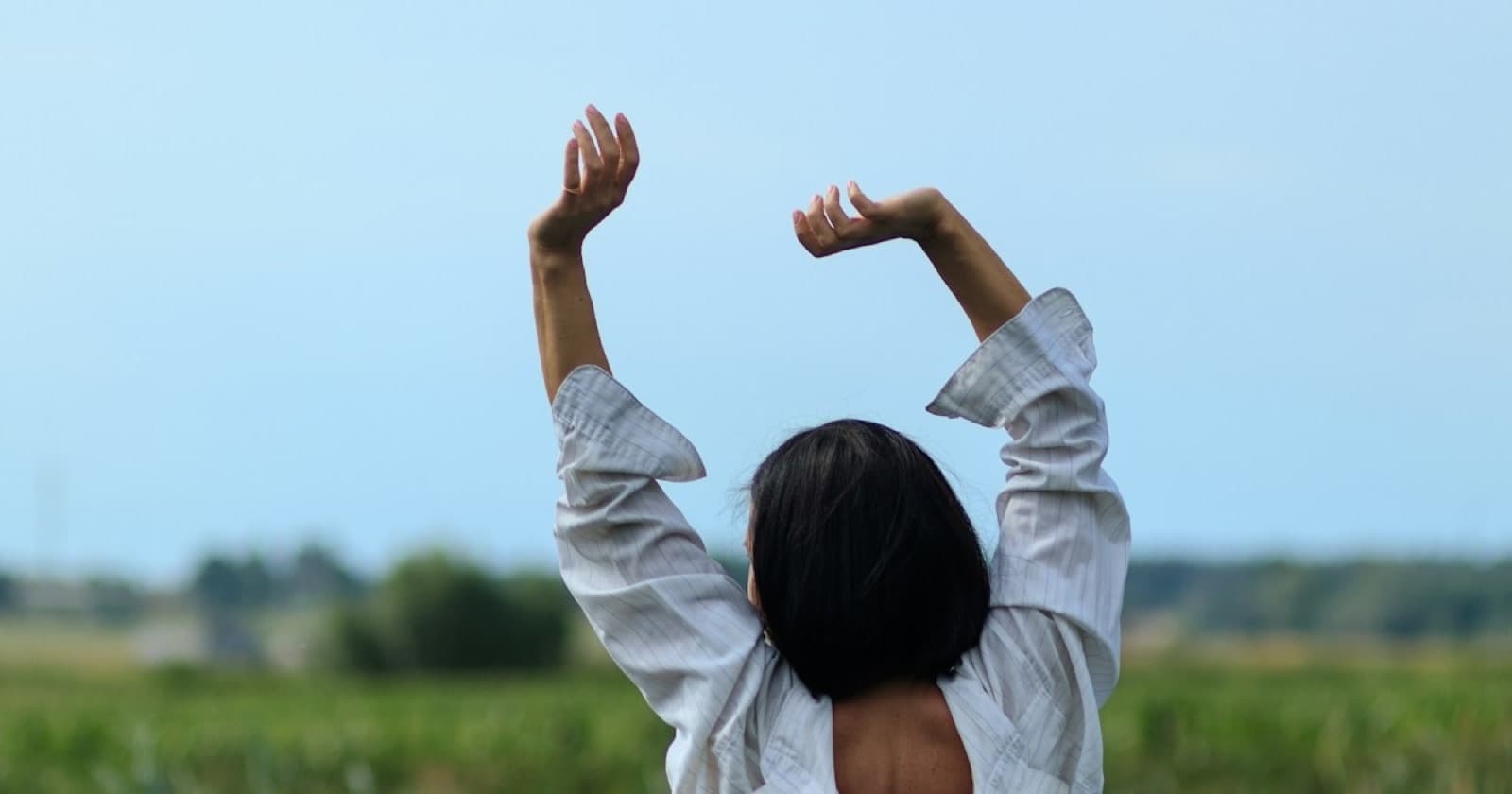
Dance movement therapy: symbols, the body and the transformation of the self
Dance movement therapy, a therapeutic art that blends ancient traditions with modern clinical practice, works as a form of non-verbal communication that helps body and psyche come together. Carl Gustav Jung, the renowned psychoanalyst, was among the first to recognise the transformative potential of bodily movement, stating that
"the body is the theatre of the soul".
Jung held that through dance the unconscious can find expression, allowing a person to explore and integrate the deepest dimensions of the self. Seen this way, DMT is a bridge between body and soul, a silent language that speaks through movement.
Dance movement therapy invites us to recognise the beauty of fragility and to understand how, through free movement, we can rediscover a deep transformative power, one that can help build a more inclusive, empathetic and aware society.
Dance therapy is therefore a tool for personal and collective transformation, able to foster inclusion, wellbeing and body awareness. This approach is not only for people living with fragility or disability: it is for anyone who sets out on a path of growth, reflection and reconciliation with themselves.
Among the figures who made a fundamental contribution to this field are Marian Chace, who laid the foundations of dance therapy in the United States; Mary Whitehouse, who enriched the approach with a psychodynamic and relational perspective; Trudi Schoop, who extended its clinical use to people with physical and cognitive disabilities; and Judith Kestenberg, who developed a systemic vision centred on somatic relationship and the group.
These pioneers broadened the role of dance therapy from a therapeutic intervention to a process of empowerment, able to release human potential and support the integration of body and mind.
Today, dance movement therapy focuses on the authentic expression of the body and the Soul, inviting each person to reconcile with their own deepest essence. In this sense, it does not simply respond to clinical needs: it becomes an opportunity to rediscover and reconnect with ourselves and with others through movement and relationship.
We live in a society that often privileges the rational, performance-driven side of life and neglects the somatic and emotional one. Yet it is precisely through the body that we can recover a vital authenticity and an awareness able to move beyond mental and physical barriers. Recognising and welcoming vulnerability allows us to turn it from a limit into a possibility for growth.
The symbolic-relational approach in dance movement therapy
Francesca Peruzzi's symbolic-relational approach integrates Jungian psychoanalytic theory, psychosomatics and movement therapy, with the aim of exploring the deeper meaning of emotions through the body. From this perspective, the body becomes a privileged vehicle for expressing and understanding psychological, relational and emotional processes.
The concept of the symbol is central: movement goes beyond physical expression to embody a symbolic language that tells stories, conflicts and inner memories. In the process of symbolisation, the body becomes a map of psychological experience, in which every gesture can point to a deep emotional content.
The therapeutic relationship plays a fundamental role: therapist, person and group form a potential space for transformation. Presence, listening and containment help lived experiences to surface and make it possible to integrate them.
Through the body and the symbol, even unconscious contents that often cannot be put into words can emerge and be transformed. Movement thus makes it possible to give shape to pain and conflict, making them something that can be experienced, recognised and integrated within the therapeutic process.
My approach is grounded in the meeting between the symbolic dimension and the interpersonal relationship, within therapeutic work that places emotional connection and non-verbal communication at its centre. Through dance and movement, I treat the symbol as a living language, able to open the door to a person's inner world and to foster a deeper understanding of what they have lived through.
Every gesture, shape or quality of movement takes on a deep and unique meaning, rooted in the person's own history, and becomes material for shared exploration within the therapeutic relationship. The setting thus becomes a dynamic space in which therapist and person co-construct meaning, making complex emotional themes visible and supporting processes of awareness and integration.
I give a central role to listening to the body beyond words, recognising in somatic and expressive signals a privileged route into inner experience. Every movement, even the most imperceptible, gives shape to what often finds no verbal expression, allowing vulnerability to emerge and be shared within a containing, transformative context.
In this sense, my work is offered as a path of inner growth and authentic reconnection with oneself and with others, in which symbol and relationship are continually intertwined, opening up possibilities for transforming and integrating experience.
The symbol: a bridge between the unconscious and consciousness
The symbol is a bridge between the unconscious and consciousness. A gesture, a posture or a distance in space can communicate beyond words.
The word "symbol" comes from the Greek symbállō, "to put together": originally it referred to two halves which, when rejoined, allowed a bond to be recognised. In this sense the symbol unites what is separate: light and shadow, rational and irrational, inner and outer.
For Carl Gustav Jung the symbol does not represent, it acts: it is a vehicle of psychological transformation that helps integrate the unconscious without being overwhelmed by it.
In an alchemical vision, the symbol reflects the process by which matter and psyche are transformed, as opposites are reunited. This movement leads to the coniunctio oppositorum, the union of opposites in a new wholeness. In Jungian terms, alchemy becomes a metaphor for the process of individuation.
Dance movement therapy translates into bodily experience what alchemy describes symbolically. In bodily gesture, emotions and unconscious contents are not thought about but transformed into movement. Through the body, opposites such as tension and release, control and surrender, emptiness and fullness can be lived and integrated. This process makes the coniunctio oppositorum concrete.
The danced gesture thus becomes a living symbol: it does not represent transformation, it sets it in motion in the present of the body.
The transformative function of dance therapy
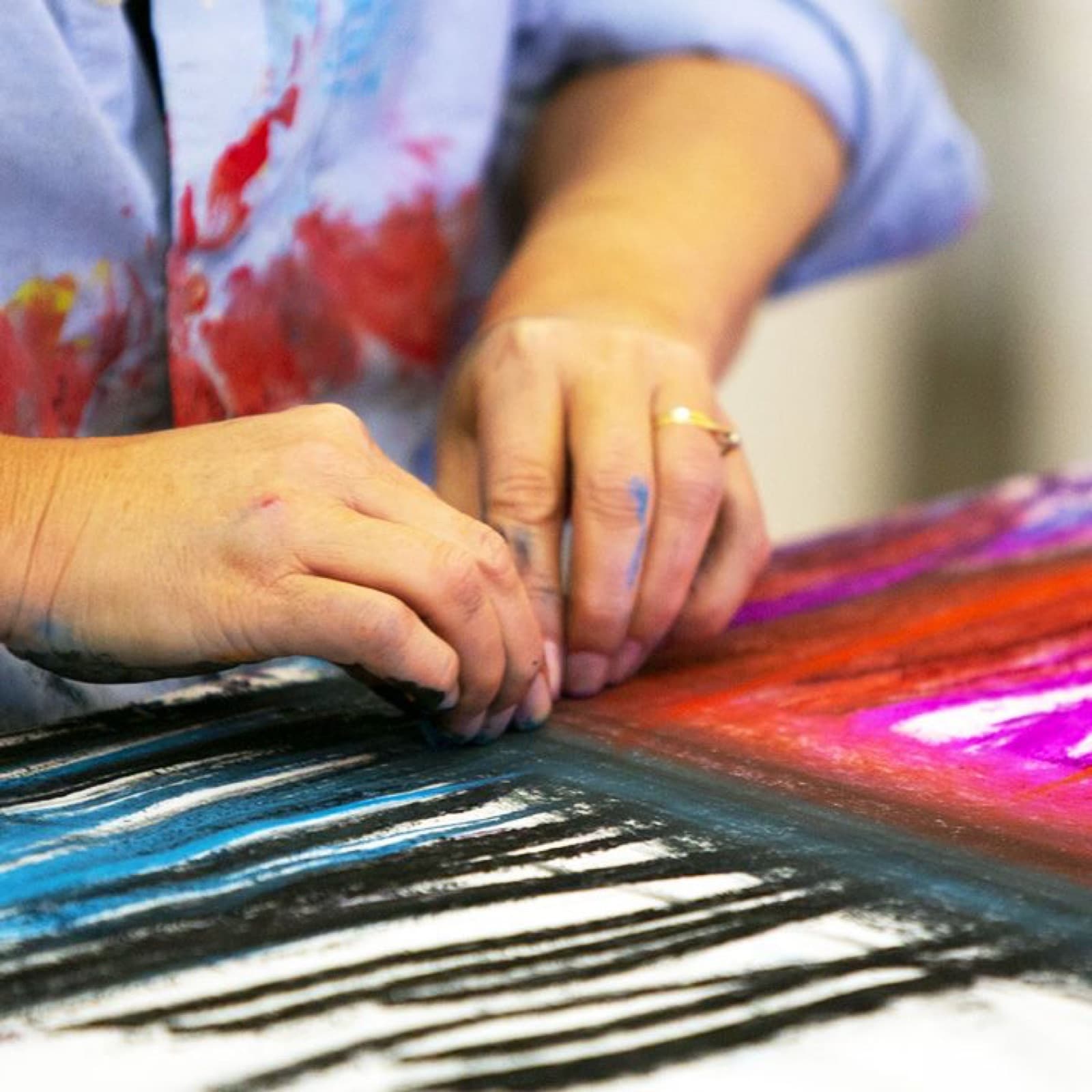
The heart of the arts therapies is the creative process, not the aesthetic result. In a spontaneous gesture, in colour or in movement, something of the human being takes shape and becomes visible.
The creative process turns invisible feeling into observable forms, making it possible to enter into dialogue with it. The symbol is born in an in-between space, between conscious and unconscious, between body and imagination. When we come into contact with art materials or with movement, a language that precedes rational thought is activated, and the creative act becomes a symbolic container, a bridge between inner and outer.
The symbol becomes a bridge between the unconscious and the conscious world, offering an immediate, empathic experience that touches the emotional and relational sphere. A gesture, a sequence of movements or physical contact can evoke symbols that communicate beyond words, revealing hidden emotions and meanings.
Within dance movement therapy, the symbolic-relational approach emerges as a method that values the symbolic dimension of movement and unfolds like a dance of meanings and connections. Every gesture is a fragment of a universal language, an archetype that tells personal and collective stories, an echo of ancestral rituals that resonate in the depths of our being.
Active imagination is a fundamental part of the method, because it makes it possible to explore and understand the inner world through movement. This form of expression draws on concepts from Jungian psychology, highlighting how symbols and archetypes can emerge during bodily experiences. In DMT, symbolic imagination is a profound means of introspection that allows people to connect with their authentic self, helping them recognise emotions and personal stories.
According to Jung, archetypes are universal, a priori forms that reside in our collective unconscious. These archetypes can show themselves through images, emotions and movements, creating a dialogue between consciousness and the unconscious. This interaction becomes evident in DMT, where people can experience a release of psychological tension and a reorganisation of past experiences. Symbolic imagination thus becomes an open door to a new self-awareness.
The fusion of symbolic imagination and movement therefore creates a rich therapeutic environment, charged with meaning, that can support deep healing processes.
Archetypes and active imagination
By integrating symbolic and anthropological elements, dance therapy invites participants to rediscover their human, cultural and personal roots. It is a journey back to the authentic self, in which movement becomes a rite of passage, a celebration of transformation.
The ritual dimension recalls ancient ancestral practices in which movement was a means of connecting with the sacred, the community and the deep self. Since the dawn of humanity, dance has been used as a rite of healing and transformation.
In the therapeutic setting, ritual becomes a symbolic space in which gesture takes on deep meanings, linking the body to the psyche and to the collective unconscious (C.G. Jung). The repetition of gestures, the structure of the session and the use of evocative elements create a safe container in which participants can explore, transform and integrate parts of themselves.
In my experience I have observed the symbolic aspect of movement and the emergence of archetypal images linked to the natural elements, used as vehicles of expression and transformation. In the groups, symbols such as the sea, springs, mountains, trees, flowers and animals were evoked, which also stand as deep metaphors of growth, rootedness and the cyclical nature of existence. Working with the natural elements makes it possible to explore universal archetypal dimensions, recalling the intrinsic bond between human beings and nature.
From a Jungian perspective, returning to these images and movements rooted in collective memory can be read as an act of reconnection with the Self, with that vital energy that transcends individual time. The strength of these symbols lies in their capacity to evoke specific, natural qualities that the rational mind cannot dispute.
Each element, while belonging to physical reality, also carries deep symbolic meanings. Water, with its fluid movement, made it possible to explore emotional flow, adaptation, purification and the capacity to hold emotional depth, as in the symbol of the sea, which recalls the vastness of inner experience.
Earth evoked themes of rootedness, stability and connection with one's origins. Images of trees symbolised growth, solidity and balance, but also the cycle of the seasons and the continual transformation of life. Movements inspired by the earth, such as gathering or working the fields, called up a sense of care, nourishment and belonging, strengthening the bond with the group.
Fire, a symbol of transformation and regeneration, inspired intense, vital movements, evoking both the collective energy that arises from the group and the warmth of the hearth as a symbolic space of welcome and protection. In this dimension, movement encouraged encounter and sharing, creating a climate of intimacy, mutual support and shared vitality.
The elements of air and space showed themselves through light, wide, suspended gestures, marked by fluidity and a sense of expansion. These qualities of movement suggested freedom, openness and transcendence, allowing an upward-reaching energy to emerge, free from rigidity and constraint.
The interplay of these natural elements during dance movement therapy sessions created fertile ground for somatic and emotional memories to reawaken, supporting a deep process of reconnection with the Self.
Each element, with its own specific symbolic value, offered participants the chance to explore and integrate essential aspects of their inner world.
In my clinical and training experience in dance movement therapy, every group and every age group brings different images and symbols, which emerge spontaneously in movement. These contents belong to the anthropological structures of the collective imagination and to a priori forms of the psyche, which can be traced back to Jung's archetypes.
These images are neither random nor purely subjective: they are organised according to universal symbolic patterns that run across cultures, eras and life stories. In this sense, bodywork in a group becomes a field in which the personal and the collective unconscious meet, generating a shared language made of gestures, rhythms and symbols.
In Jungian terms, this process can be read as a movement of reconnection with the deep Self, the psychological wholeness that integrates conscious and unconscious and shows itself through archetypal images able to give shape to the most essential human experience. Through the moving body, these images become lived, embodied and transformative, restoring a sense of continuity, belonging and integration.
Conclusion: the process as care
My vision goes beyond individual therapeutic work: it is a call to social action, an invitation to recognise fragility as a resource and movement as a tool of care and relationship, able to bring about deep and positive change.
The expressive arts therapies, and dance movement therapy in particular, are tools of individual and collective transformation. They offer spaces of care, relationship and freedom in which the body and the creative process become means of communication, integration and change.
Unexpressed emotions and traumatic memories tend to crystallise in the body, showing up as muscular tension and psychosomatic symptoms. In this context, movement becomes an essential therapeutic channel, making it easier to access and process deep, unspoken contents. Dance therapy thus makes it possible to work through these experiences, freeing the body from the traces of the past and opening up to a broader awareness. Through movement, participants can begin a process of transforming their inner narratives and integrating the self.
Every authentic movement becomes a step towards reconciliation with oneself and with others. Every symbol that emerges in the creative process opens new possibilities for listening, awareness and transformation.
The arts therapies lead a deeply human practice, able to restore dignity to fragility, value to expression and room for transformation.
Symbolic-relational dance movement therapy strengthens our relationship with the body and values movement as an expression of our deepest identity. It encourages the acceptance and celebration of each person's uniqueness, overcoming the split between body and mind.
More broadly, the arts therapies help build a more inclusive and aware society, in which every individual can be welcomed in their uniqueness, strength and fragility, and so become a way of building a society that recognises fragility as a generative resource, able to nurture growth, connection and shared humanity.
Francesca Peruzzi
Psychologist, artist, dance movement therapist.