
Anxiety
Anxiety in the body: how it shows up and how to regulate it
Francesca Peruzzi, psychologist · 5 October 2026 · 10 min read
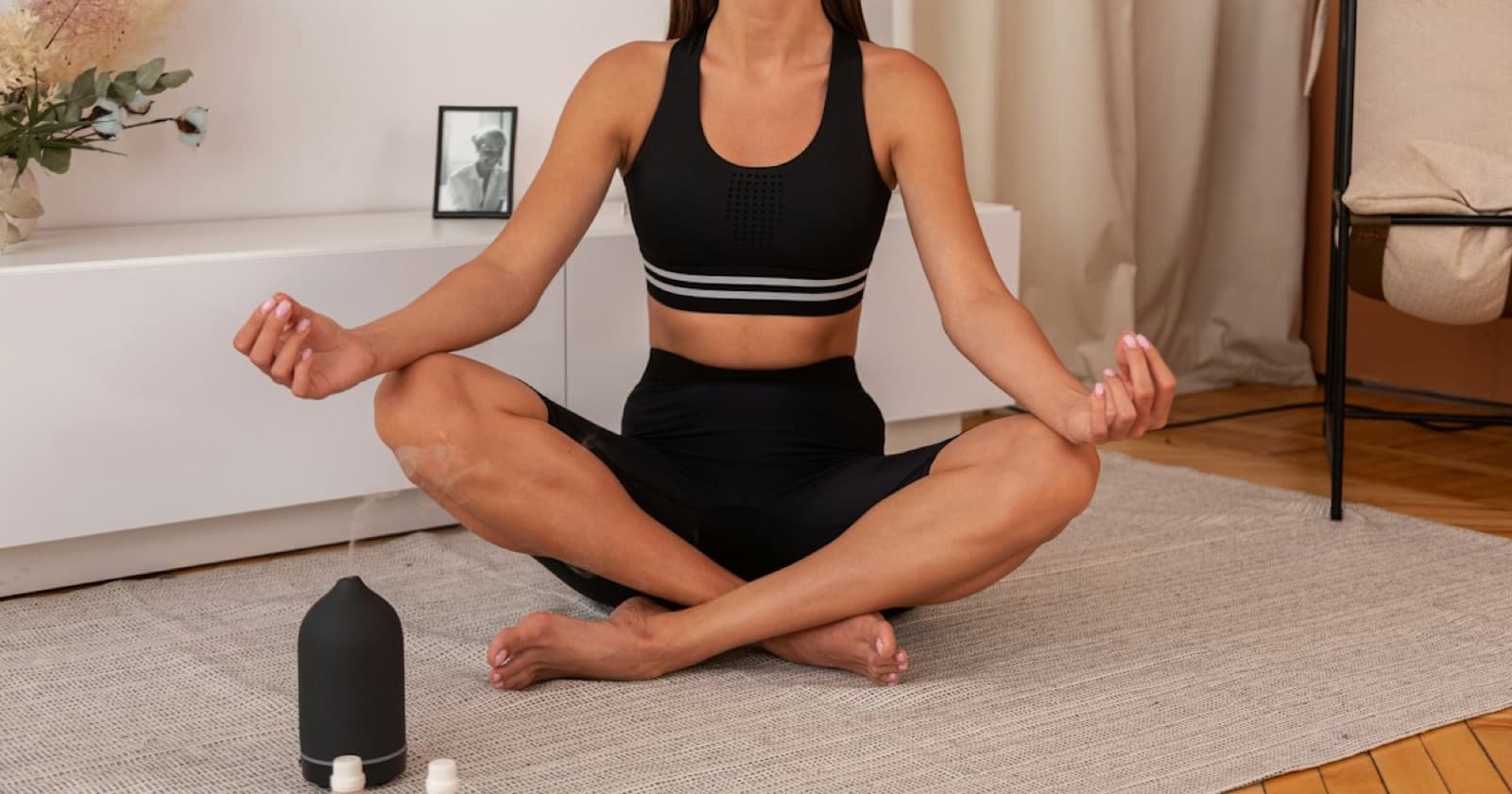
When you feel anxiety in your body before your mind
Your heart starts racing while you're sitting at your desk. You feel a lump in your throat before a phone call. At night you wake up short of breath, without having dreamt anything frightening.
If this happens to you, you're not imagining it. Anxiety isn't just a thought going round in circles: it's an experience of the whole body, and the body often shows it before the mind finds the words. That's why trying to reason your way out of it, on your own, works so poorly.
In this article we look at how anxiety shows up, where it can come from, why the nervous system keeps it switched on, what you can do in the moment it rises and how, over time, the body can become a safer place to be again.
What anxiety is, and why you feel it in your body
Anxiety is the body's response to a threat that hasn't arrived yet. Fear responds to a present danger, here and now; anxiety looks ahead and prepares for what might happen. The two overlap, but they leave different physical footprints: fear brings sudden peaks of arousal, while anxiety tends to leave muscle tension and a state of vigilance.
It isn't a flaw. We all feel it, and in measured doses it's useful: it makes us prepare for an exam and keeps us alert while we cross the road. The body feels it because the body is what gets organised to act: the muscles stay ready, the breath shortens, attention narrows onto the possible problem.
When it stops being useful
Anxiety becomes a problem when it's out of proportion to the real risk, when you find it hard to control, when it lasts a long time and starts to limit what you do. According to the American Psychiatric Association, up to one person in three may experience an anxiety disorder at some point in their life: you're not an exception, and you're not alone.
Having anxiety doesn't mean having an anxiety disorder. Telling the two apart takes an assessment by a professional; this article helps you recognise the signs and take care of your body in the meantime.
Further reading: The difference between anxiety and panic attacks.
How anxiety shows up
Anxiety shows up on several levels at once, and the body often speaks first. Not everyone feels the same signs: here are the most common ones, to be read as an invitation to listen to yourself, not as a diagnosis.
- In the body: a fast heartbeat, a lump in the throat, short or shallow breathing, a knotted stomach or bowel problems, sweating, trembling, dizziness, tension in the shoulders, neck and jaw, tingling.
- In the emotions: a sense of imminent danger with no clear cause, irritability, fear of losing control, always feeling "on edge".
- In the mind: worries chasing one another, catastrophic scenarios ("what if…"), difficulty concentrating, a mind that won't switch off.
- In behaviour: avoiding frightening situations, constantly seeking reassurance, checking, putting things off, or filling every minute so as not to stop and feel.
- In sleep: trouble falling asleep, sudden waking in the middle of the night, light sleep that doesn't refresh you.
Many of these signs, especially the physical ones, are also common to medical conditions. If they appear for the first time, are intense or include chest pain, talk to your doctor straight away: ruling out a physical cause is the first step, not a way of dismissing what you feel.
Why anxiety happens
There's no single cause of anxiety: it almost always arises from several factors meeting, which weigh differently from one person to another. Research looks at both genetic and environmental factors, from the family environment to life events such as trauma, illness or a major change.
- Predisposition. Having family members with anxiety makes it more likely you'll experience it; some genetic variants linked to the stress response seem to play a part. A predisposition is not a destiny.
- A more sensitive alarm system. In the brain, circuits that use substances such as noradrenaline, serotonin and GABA regulate the level of alertness, and in some people the alarm seems to go off more easily, sometimes for nothing. This helps explain why anxiety can arrive for no obvious reason, but it's never the whole story: psychological therapies still work.
- Life experiences. Bereavement, illness, difficult or traumatic experiences, periods of change and environments where you felt unsafe can leave a nervous system quicker to raise the alarm. If you'd like to explore this link, read Trauma and the body: why the nervous system stays on alert.
- Prolonged stress. Constant pressure, little recovery and poor sleep lower the alarm threshold.
- Medical conditions and substances. Thyroid disorders, some heart or respiratory conditions, certain medications, caffeine and alcohol can cause or amplify anxiety-like symptoms. This is one of the reasons a medical check comes first.
- Ways of reacting that keep it going. Rumination, negative beliefs ("I won't manage") and avoidance don't always create anxiety, but they make it chronic.
A psychosomatic reading: the view of the Scuola Riza
In the psychosomatic tradition of the Scuola Riza (an Italian school of psychosomatic medicine), which also reads anxiety as a symbolic language, anxiety expresses all the life we're not living. It arises when we try to plan, control and keep everything in the realm of the head: the vital energy, desires and emotions we neglect find no room to circulate and press to be heard. Anxiety becomes a warning bell signalling this excess of control.
In this reading, symptoms too have a symbolic meaning. The wildly pounding heart protests because we don't listen to its rhythms; the knotted stomach tells of a constraint; difficult breathing speaks of an unbalanced exchange between the inner and outer worlds. The suggestion that follows is not to fight anxiety but to listen to it, and to learn to express what you carry inside without judging or directing it.
It's an interpretive key, born in a clinical and symbolic setting, not an explanation proven by research, and it doesn't replace the factors listed above. It can work as a question ("what am I neglecting in myself?"), never as blame: anxiety doesn't mean you're doing something wrong, and it should always be looked at on the medical level too, and in the light of your own history.
Whatever the weight of the various factors, one thing holds for everyone: anxiety doesn't come from a lack of willpower.
Why the body stays on alert
The body stays on alert because the nervous system responds to what it predicts, not only to what happens. If the brain anticipates a problem, the sympathetic branch, the "accelerator" of the autonomic nervous system, prepares the body for action: heart, breath and muscles get organised as though the danger were already here.
In the window of tolerance model, this is the state of hyperarousal: you're above the window, where it's hard to think calmly and return to a quiet baseline.
Further reading: The window of tolerance: what it is, how to recognise it and how to widen it.
The loop that keeps anxiety switched on
What makes anxiety last is often a loop between body and mind. A physical sensation (the heart speeding up) is read as a danger signal ("something serious is happening"); that reading increases the alarm, and the alarm makes the sensation stronger. It isn't weakness or lack of willpower: it's a system trying to protect you, with too much zeal.
The good news is that the loop can be broken at several points. The most accessible is the body.
What helps in the moment, and what can make it worse
When anxiety rises, the aim isn't to make it disappear but to give the body a signal of safety clear enough for it to lower its guard. One or two minutes and three gestures are enough, to try in this order.
- Orient yourself. Look slowly around the room, without hurrying, and name three things you can see, then three sounds. You're telling your nervous system that here and now there's no threat. If you'd like step-by-step guidance, try AURA 03 · Back to the present.
- Lean on something. Feel your feet on the floor and your back against the chair. You can press your hands against the edge of the table for a few seconds: the pressure gives the body a solid boundary to feel.
- Breathe out slowly. Breathe in normally, without forcing, and breathe out slowly, a little longer than you breathed in. Some studies suggest that slow breathing can reduce anticipatory anxiety; the effect, however, isn't the same for everyone.
What can make it worse
- Fighting the sensation. "I must calm down right now" is yet another demand to perform, and it keeps the body on alarm. Try to observe what you feel, name it and let it pass.
- Always avoiding what frightens you. Avoidance brings immediate relief, but it teaches the nervous system that the danger was real and gradually narrows what you're able to do.
If an exercise makes you more agitated, stop, open your eyes and go back to looking at the room: you haven't done anything wrong, that step simply needs someone alongside you.
To take stock of your anxiety, in your private area you'll find the full anxiety assessment, together with the kit of guided practices. If you don't have access yet, it opens for free when you take the anxiety test.
Widening the window over time
The gestures of the moment help you come home; making the way back easier takes repetition. Every time you move from alarm to a little more calm and notice it, your nervous system learns that this path exists. Four areas matter more than the others.
- Sleep. Short or broken sleep lowers the alarm threshold: the window narrows. Regular hours and a less stimulating evening are an investment in the next day's anxiety.
- Movement. Walking, dancing, swimming: they discharge the arousal built up in the body. Regularity counts more than intensity, and slow movement is a good start.
- Relationships. The nervous system also regulates itself in the presence of someone who makes you feel safe: another person's voice, gaze, rhythm. You don't have to face anxiety alone.
- Expression. Drawing, modelling, writing, moving: when words aren't enough, a gesture gives shape to what the body feels and makes it feel less enormous.
It can also help to look at what adds to the load: a lot of caffeine can amplify palpitations and agitation in more sensitive people, and a constant stream of news keeps the system on alert. It's not about cutting everything out, but about noticing what sets you off.
Finally, approaching what you avoid, in small steps and with support, is one of the most effective ways to give the body back its trust. If your anxiety is strong, this is work to do with a professional.
For work with the body and movement, also read Somatic art therapy, The neuroscience of movement, Dance movement therapy and 4 effective strategies for managing psychosomatic symptoms.
When to ask for help
It's time to get some support when anxiety has been there almost every day for weeks, or when it starts making decisions for you. You don't need to wait until you feel "bad enough".
- Anxiety has been present almost every day for weeks or months and doesn't ease with rest.
- You have repeated panic attacks, or live in fear that they'll come.
- You avoid more and more situations (going out, driving, going to work, meeting people) and your life is shrinking.
- Your sleep, work or relationships are clearly affected.
- You use alcohol, medication or other substances to calm yourself down.
If your physical symptoms are intense or new, talk to your doctor first. And if you're thinking of harming yourself, call 112 or your local emergency services straight away, or go to your nearest A&E.
Where you can start
- If you want to work out where to begin: the anxiety test takes two minutes and at the end you receive the AURA anxiety kit for free. Take the free test →
- If you want to talk to us about it: book the discovery call for the Radici e Ali (Roots and Wings) pathway.
- If you prefer a group experience: discover Balance and group somatic art therapy.
This article is for information only and does not replace a medical or psychological assessment.