
Trauma and the body
Trauma and the body: why the nervous system stays on alert
Francesca Peruzzi, psychologist · 5 October 2026 · 15 min read
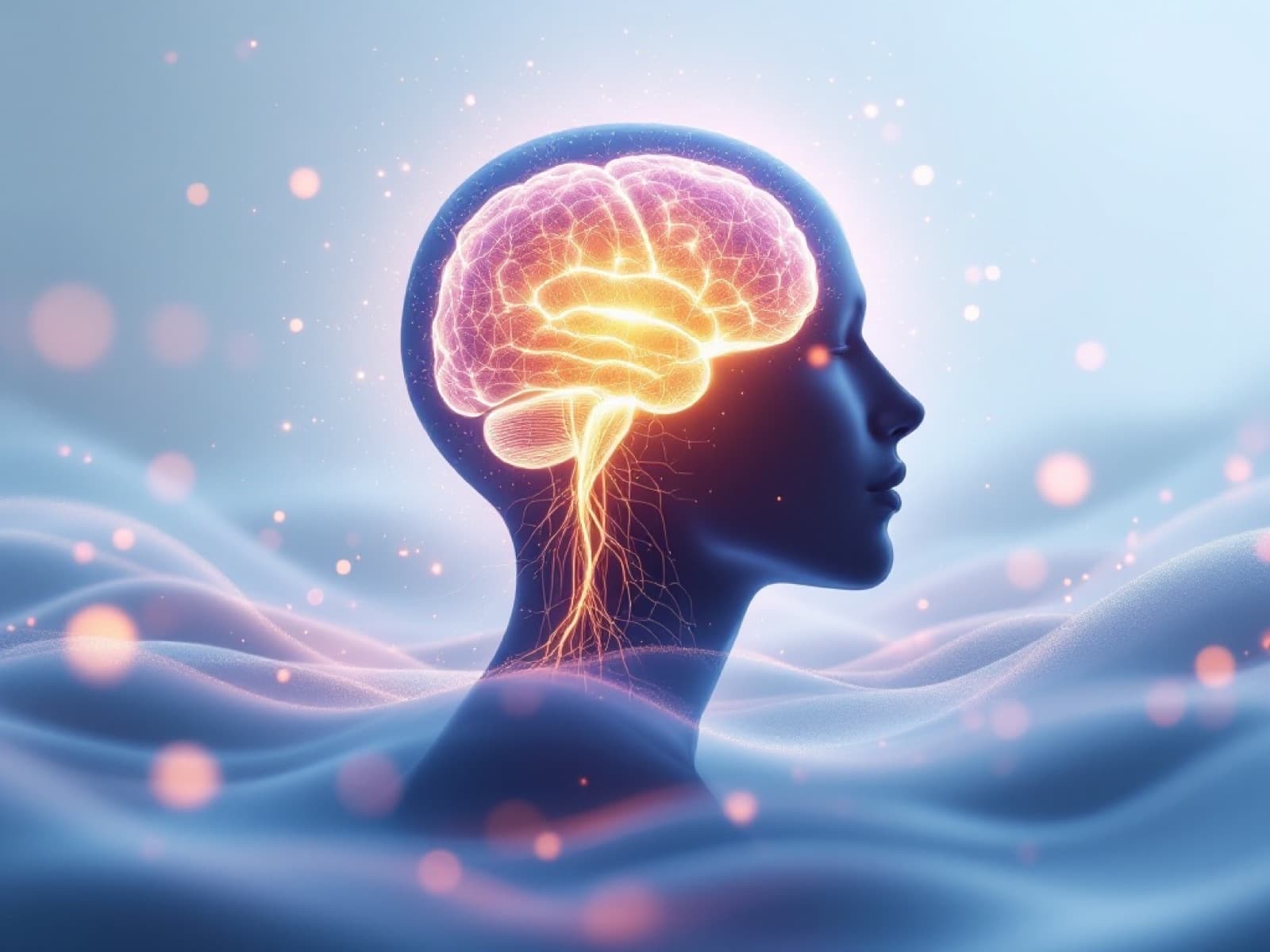
When the past keeps living in the body
Some people, years after a difficult experience, still catch themselves jumping at a sudden noise, waking at night with their heart pounding, feeling "switched on" for no obvious reason. Perhaps the mind says everything is fine now. The body, though, doesn't seem to agree.
This gap between what you know and what you feel is not a character flaw, and it is not weakness. It is the way your nervous system learned to protect you: after something that made you feel in danger, it can stay ready to defend itself even when the danger has passed.
In this article we look at what we mean by trauma, what happens in the body, why the nervous system can stay on alert and how to recognise the signs. You will also find some resources to help you feel steadier in the present, and guidance on when and how to ask for support.
In short: a body that stays on alert after a difficult experience is not "wrong": it is doing its best to protect you. Understanding how it works is a first step towards feeling safer. This text is not a programme for processing trauma: that work should be done with a professional, at the right pace.
What we mean by trauma
In everyday language, "trauma" means anything that has made us suffer. In psychology it has a more precise meaning: it is the response to an event, or a series of events, that threatened our physical or emotional safety and, at that moment, exceeded the resources we had to cope with it.
What matters is not only what happened, but how we lived through it: how helpless, alone, trapped or unsupported we felt. That is why the same event can leave deep marks on one person and fewer on another, without saying anything about anyone's worth or strength.
How some authors describe it
The trauma literature offers different definitions that complement one another. Here they are in our own words:
- Gabor Maté: trauma is not the event itself, but what happens inside us as a result of it. It is an inner wound, often a disconnection from ourselves and our emotions, which arises as an adaptation in order to survive.
- Bessel van der Kolk: trauma is an experience that overwhelms our capacity to cope and leaves traces in the body and nervous system, as well as in the mind. This is why it can show up as physical sensations and reactions, even before it shows up as memories.
- Peter Levine: trauma lies above all in the way the nervous system holds on to a defensive response that was left incomplete, rather than in the event itself. The focus is on regulating the body.
- Judith Herman: she described complex trauma, which arises from prolonged or repeated experiences in which the person was dependent on, or controlled by, others and could not get away.
What they have in common is that trauma is defined by its impact on the person, not by the "objective" severity of the event.
Single-event trauma and trauma that repeats
- Single events: an accident, an assault, a sudden loss, a disaster, a medical procedure experienced as threatening.
- Experiences repeated over time: growing up in an unpredictable, neglectful or frightening environment, suffering abuse or humiliation, living in relationships where you don't feel safe. In these cases people often speak of complex or relational trauma, because it has affected the way we feel safe with others and with ourselves.
Not every reaction is a disorder
After a difficult experience it is common to feel unwell for a while: sleeping worse, being more irritable, reliving what happened. For many people these signs ease over time and with the support of loved ones. In other cases they persist, or return months or years later. Only a professional can assess whether this is a disorder such as post-traumatic stress disorder; here we are interested in understanding how the body takes part in all this.
What happens in the body when faced with a threat
When facing danger, the body doesn't wait for the mind to think things through. The alarm system switches on in fractions of a second: the heart speeds up, the muscles get ready, breathing changes, digestion slows. It is a fast, automatic reaction designed to help us survive.
This activation translates into defensive responses we know well:
- Fight or flight: energy to react or to get away. You may feel anger, agitation, a need to move.
- Immobility (freezing): the body locks up, as if "suspended". It is a frequent response when there is no way to escape or fight back.
- Shutdown: a sense of detachment, numbness, of "not being there". It can appear when the threat is too big or lasts too long.
- Appeasement (fawning): trying to be accommodating in order to avoid danger, especially in relationships.
None of these responses is chosen. They are ways in which the nervous system tries to protect us, and they are normal at the moment they happen.
The body remembers in its own way
According to several models in psychology and neuroscience, very intense experiences are stored not only as memories that can be told, but also as sensations, fragmented images and bodily reactions. This is known as implicit memory: something that doesn't come back as a memory "with a before and an after", but as a present sensation.
This is why a smell, a tone of voice, a place or even a particular time of day can reactivate the old reaction in the body, even when the mind makes no connection at all. These are working hypotheses whose details research is still debating, but they describe an experience many people recognise: the body reacts before you understand why.
Explicit memory and implicit memory
To understand why the past can "feel" present, it helps to distinguish two ways in which the brain stores experiences:
| Explicit memory | Implicit memory | |
|---|---|---|
| What it is | The memory you can tell: facts, dates, places, a story with a before and an after | The memory you feel: sensations, emotions, bodily reactions, habits |
| How it comes back | Deliberately: I choose to remember | Suddenly, triggered by a cue (a smell, a sound, a tone of voice) |
| Where we feel it | In the mind, as a story "that belongs to the past" | In the body, as something happening now |
| In trauma | It can be fragmented, confused or incomplete | It can stay very vivid and be reactivated without us understanding why |
According to authors such as Bessel van der Kolk, under severe threat the brain struggles more to place the experience in time and turn it into an orderly story, while the bodily and emotional traces remain very active. This is why the body can react "as it did back then" even when the person knows perfectly well that they are safe now. It is a widely used explanatory model, whose details are debated in research.
The practical consequence is important: you don't need to "understand" or remember more for the body to calm down. It often helps first to give the body present experiences of safety and regulation, and only later, with proper support, to bring order to the story.
How the brain adapts to trauma
A much-quoted perspective on this topic comes from the physician Gabor Maté. In his reading, trauma is not so much the event itself as what happens inside us as a consequence: an adaptation. To protect themselves, a child or an adult in difficulty may learn to shut down their emotions, to ignore the body's signals, to set aside their own needs in order to keep their bond with others or to stay safe. In this sense, trauma is first and foremost a loss of contact with oneself: a clever strategy at the time it was needed, which over time can become costly.
This reading is in dialogue with what neuroscience describes, with one caveat: these are models and associations, not destinies.
What research shows about the neurobiological impact
- Amygdala and the alarm system: studies of people with traumatic experiences often find greater reactivity in the areas that detect threat, such as the amygdala. It is as if the alarm threshold had been lowered.
- Prefrontal cortex and hippocampus: these are the areas that help us assess the context ("it's over, I'm safe now") and place a memory in time. In some trauma presentations their regulating function appears less effective, which may explain why the past "feels" present.
- The stress axis: the system that manages cortisol and adrenaline can work differently, with effects on sleep, energy, mood and the body's defences. Results vary from person to person and from study to study.
- Early experiences and health: large studies, starting with research on adverse childhood experiences (ACEs), show an association between early adverse experiences and greater psychological and physical difficulties in adulthood. It is a statistical association, not an individual verdict.
The good news, and it is well documented, is that the brain remains plastic: safe relationships, experiences of regulation and appropriate psychological support can change these responses over time. We don't promise this as a cure, but as a real possibility of change.
Why the nervous system stays on alert
Normally, when danger passes, activation drops and the body returns to a state of calm. After a traumatic experience this return may not be completed. The alarm system stays set to high sensitivity: it prefers a false alarm to a missed danger.
From the nervous system's point of view this is a logical choice. If a signal once preceded something dangerous, the body learns to recognise it and to react in advance. The problem arises when that signal appears in safe situations and the alarm goes off anyway.
The cycle that keeps the alarm on
- A cue (a sound, a sensation, a situation, a thought) resembles something from the past.
- The body activates: heart, breath, muscles, tension. Often before you understand why.
- You look for safety: you avoid places or people, you scan your surroundings, you tense up, or you detach and shut down.
- Immediate relief, but the body doesn't learn that the cue was harmless. Next time the alarm will be just as ready.
In this way the alert feeds itself. Not because the person isn't doing enough, but because strategies that protect in the short term can keep the alarm going in the long term.
When activation is too much or too little
A useful way of describing these swings is the window of tolerance: the zone in which we feel activated enough to function and calm enough to think and feel. After trauma this window can narrow: it becomes easier to tip into hyperarousal (agitation, anger, panic) or hypoarousal (numbness, emptiness, detachment). These are not failures, but ways in which the system regulates a load that is too heavy.
How trauma shows up and the difficulties it can bring
Trauma doesn't have just one face. It can take the form of a specifically recognised condition, or of widespread difficulties that for years are not connected to what happened. Here are the most common paths.
Post-traumatic stress disorder (PTSD)
It can develop after an event that threatened someone's life or physical integrity. According to the ICD-11 classification, it includes three groups of signs: re-experiencing the event (intrusive memories, flashbacks, nightmares), avoiding reminders of it, and a persistent sense of current threat (hypervigilance, being easily startled).
Complex PTSD (CPTSD)
It can appear after prolonged or repeated experiences, often within relationships, from which it was hard to escape. In addition to the signs of PTSD, according to ICD-11 it includes disturbances in self-organisation: difficulty regulating emotions, a negative self-image (feeling flawed, guilty, worthless) and difficulties in relationships (feeling distant, finding it hard to trust, repeating painful patterns).
When trauma has no diagnostic name
Many people don't recognise themselves in a condition like PTSD, yet live with difficulties that may be rooted in traumatic experiences:
- Anxiety: constant worry, tension, panic attacks, a sense of imminent danger.
- Emotional difficulties: mood swings, sudden anger, unexplained sadness or emptiness, difficulty feeling or naming what you feel.
- Relationship difficulties: fear of abandonment or of intimacy, a need for control, a tendency to people-please or to withdraw, choices that repeat family scripts.
- Dissociation: a sense of detachment from yourself or from reality, memory gaps, "fog".
- Somatisation: widespread pain, chronic tension, digestive problems, tiredness, headaches or other physical symptoms that medicine cannot fully explain. The body can become the place where what never found words finds a voice. See also the article on strategies for psychosomatic symptoms.
- Behaviours to avoid feeling: using alcohol or substances, overworking, a difficult relationship with food, addictions.
- Sleep: insomnia, nightmares, sudden awakenings.
None of these signs, on its own, indicates trauma. Rather than looking for a diagnosis, it makes sense to ask whether the overall picture tells a story of alertness and adaptation. If you want to explore further, here are articles covering some of these aspects:
How to tell whether trauma plays a part
The signs of a dysregulated nervous system (in the body, emotions, thoughts, relationships and sleep) are many and vary from person to person. Here we are interested in another question: how to tell whether what you feel might have to do with a traumatic experience.
An important reminder: physical symptoms such as a racing heart, pain, tiredness or sleep problems can have medical causes. If they are new, intense or worrying you, talk to your doctor first.
Do you recognise yourself in these sentences?
Sometimes the clearest way to understand what is going on is to notice whether a sentence sounds like you:
- "I'm fine, and yet my body is always tense, as if it were waiting for something."
- "All it takes is a noise or a tone of voice for me to feel on alert."
- "I feel there's something wrong with me, even when nobody has said anything."
- "In relationships I either cling too tightly or pull away."
- "I've stopped feeling: I keep going, but it's as if I'm not there."
- "I have pains and symptoms that no test can explain."
- "I've always been told I'm too sensitive."
- "I know it's over, but my body doesn't."
If you recognised even one, it is not a sentence and it is not a diagnosis: it is information about how your nervous system learned to protect you.
Would you like a first orientation? The trauma test, inspired by the ITQ, helps you understand whether your experiences resemble the patterns of PTSD and complex PTSD. It takes a few minutes, it's free and confidential. It doesn't replace an assessment, but it can be a good starting point to bring to a session.
Resources for coming back to the present (without reliving the past)
When the body is on alert, the goal is not to "process" or remember more: it is to help the nervous system register that, here and now, you are safe enough. These gestures are only about stabilisation. Working on traumatic experiences, if and when you want to, should be done with the support of a professional.
- Orient yourself: slowly move your gaze around the room and quietly name three things you can see, today's date and where you are. This helps the body recognise the present.
- Lean into support: feel the weight of your body on the chair, your feet on the floor, your back against the backrest. Gently press your feet into the ground for a few seconds.
- Breathe out slowly: a small in-breath and a long out-breath, without forcing. If focusing on your breath makes you more agitated, let it go and try another gesture.
- Touch something concrete: a cold or soft object, a warm mug, a blanket. Bring your attention to the sensation of contact.
- Move gently: stretch your arms, walk, shake out your hands. Movement helps discharge some of the activation.
- Seek a safe presence: a voice, a message, an animal, a person you trust. For the nervous system, safe company matters enormously.
If you'd like a guided experience, AURA 03 · Return to the present is a short practice designed for this, in your private area. My advice is to try one gesture at a time and to stop if you feel your discomfort increasing.
What to avoid doing on your own
- Forcing yourself to remember or tell everything to "get rid of it": this can reactivate the alarm without giving you the tools to regulate it.
- Suddenly exposing yourself to what frightens you, or, on the contrary, avoiding everything for ever: both paths can keep the alert going. It is better to proceed gradually and with support.
- Numbing your sensations with alcohol, non-prescribed medication or constant busyness: they bring short-term relief but increase fatigue over time.
- Judging yourself for how you react. Your body is doing what it learned to do to protect you.
When to ask for help
Asking for support doesn't mean you "can't manage on your own": it means giving your nervous system some company that helps it feel safe. It is worth doing if:
- the signs have lasted for weeks or months and are not easing;
- memories, nightmares or sudden reactions interfere with work, sleep or relationships;
- you often feel detached from yourself or from others, or overwhelmed;
- you are using alcohol, medication or other strategies to avoid feeling;
- you feel you can no longer stay in the present on your own.
If you are struggling right now. If you feel you are in danger, or you are having thoughts of harming yourself, don't stay alone: call 112 (the European emergency number) or your local emergency services, or go to the nearest emergency department. In Italy you can also contact:
- 1522: a free helpline, available 24 hours a day, for women experiencing violence and stalking;
- Telefono Amico Italia: 02 2327 2327, an Italian listening helpline for anyone who needs to talk to someone;
- Telefono Azzurro: 19696, an Italian helpline for children and teenagers.
Where you can start
- If you want to understand better how you are: the trauma test is not a diagnosis, but it can help you get a clearer sense of what you feel. At the end you receive the free AURA kit for the body, with guided stabilisation practices. Take the free test →
- If you want to talk about it: the discovery call is a free first meeting where you can share what brings you here and work out together which path makes sense for you. Book the discovery call →
- If you want to start from the body, gradually: Balance and group somatic art therapy are guided experiences that work on regulation and presence, without asking you to tell your story. They don't replace individual psychological support; if you have a traumatic experience behind you, I recommend talking about it in the call first. Discover the group experiences →
This article is for information only and does not replace a medical or psychological assessment.